


- Exploring the Factors Beyond CO2
DR. MATTHEW WIELICKI

The Earth’s climate is a coupled, nonlinear, and chaotic system, influenced by a multitude of factors beyond any single variable. While the current rise in global temperatures is a concern, it’s crucial to understand that climate history is full of changes in surface temperature with little change in GHG concentration. For example, the Little Ice Age (LIA), a period of regional cooling between the 16th and 19th centuries, offers a valuable case study for understanding the limitations of solely attributing global temperature variations to CO2 levels.
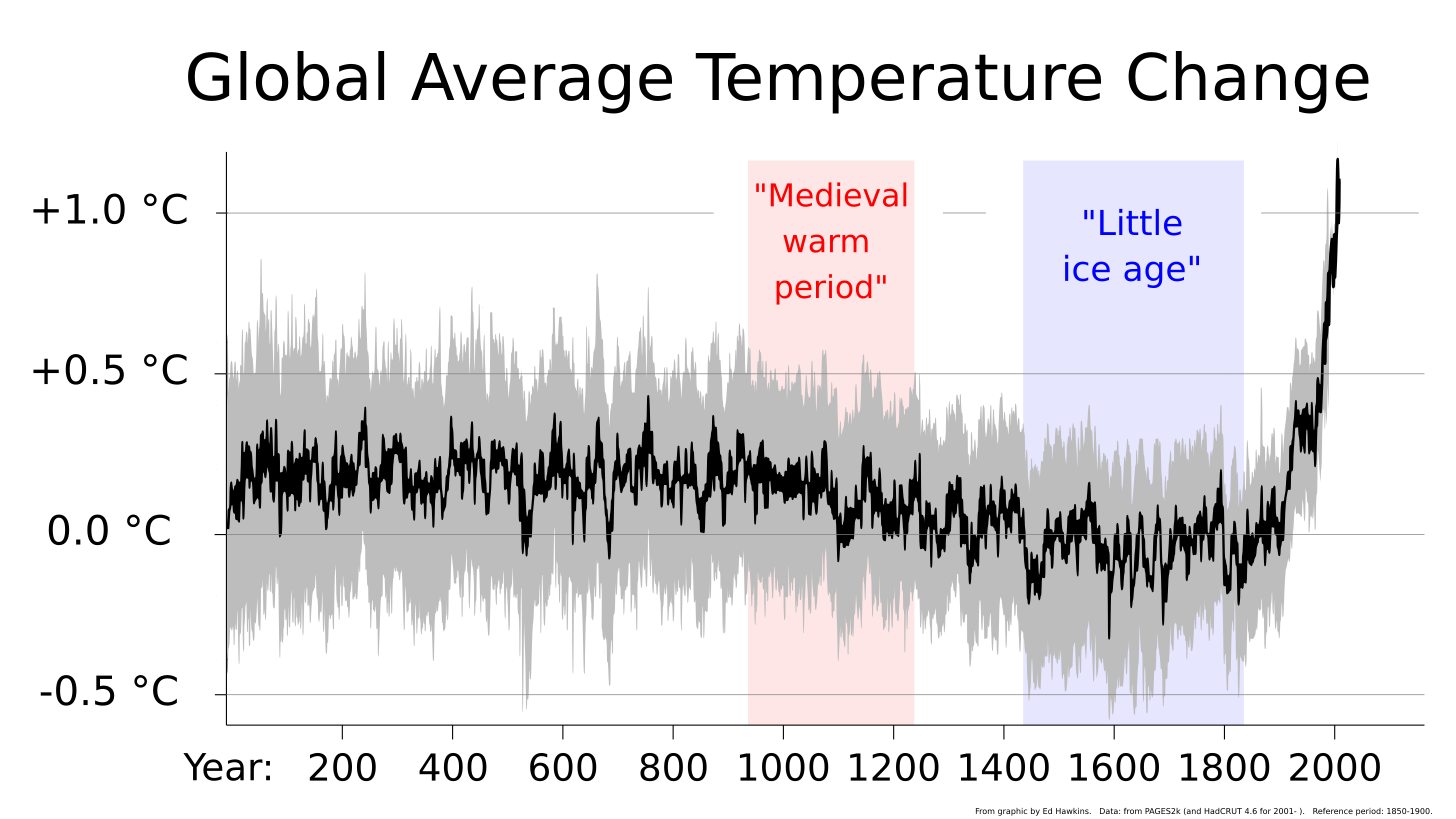
During the Little Ice Age, Earth experienced a significant cooling period although CO2 levels were relatively stable. This contradicts the popular belief that CO2 is the primary driver of surface temperature. Several factors contributed to the cooling during the Little Ice Age:
- Decreased solar activity: During the LIA there were periods of significantly diminished solar activity known as the Spörer Minimum (1460-1550) and Maunder Minimum (1645-1715).

- Volcanic activity: Large volcanic eruptions during the LIA injected vast amounts of ash and sulfur dioxide into the atmosphere, which reflected sunlight and caused cooling. In fact, a study published in the journal Nature Geoscience found:We conclude that the end of the Little Ice Age was marked by the recovery from a sequence of volcanic eruptions, which makes it difficult to define a single pre-industrial baseline.
- Ocean circulation: Changes in ocean currents during the LIA redistributed heat around the globe, leading to regional cooling. A study published in the Journal Nature Communications found:The cooling transition into the Little Ice Age was the last notable shift in the climate system prior to anthropogenic global warming. It is hypothesised that sea-ice to ocean feedbacks sustained an initial cooling into the Little Ice Age by weakening the subpolar gyre circulation; a system that has been proposed to exhibit bistability.Source: https://www.nature.com/articles/s41467-022-32653-x#:~:text=It%20is%20hypothesised%20that%20sea,transition%20has%20however%20been%20lacking.
- Orbital changes: The Earth’s orbit around the Sun is not a perfect circle, and its tilt and orientation change over time. These variations, known as Milankovitch cycles, can influence the amount of solar radiation reaching the Earth’s surface however they operate at timescales that likely had little influence on the LIA.

This historical period suggests that factors other than CO2 levels can significantly influence Earth’s climate, highlighting the complex interplay of various natural mechanisms (e.g., solar variability, volcanic activity, ocean currents, orbital mechanics) in climate regulation. While it’s true that CO2 is a GHG influencing surface temperature, the LIA underscores the importance of understanding broader climatic forces that likely operate today.
During the Little Ice Age, CO2 concentrations were significantly lower than today’s levels and showed little variation, yet Earth experienced considerable cooling, further challenging the view that CO2 is the primary driver of temperature changes.

The LIA primarily impacted the North Atlantic region, characterized by colder winters, shorter growing seasons, and increased glacial activity. While the Northern Hemisphere did experience a significant cooling trend, it wasn’t uniform across the globe. This regional disparity underlines the complexity of climate dynamics, where factors like ocean circulation patterns and volcanic activity can create localized effects and further underscore the absurdity of a global average temperature.
Furthermore, cold temperatures have historically posed a greater threat to society than warm temperatures. Cold spells and frost can damage crops, leading to reduced food production and famine. In contrast, warmer temperatures can extend growing seasons and increase agricultural productivity.
Cold weather is associated with increased mortality due to hypothermia, respiratory diseases, and cardiovascular issues. While heatwaves can also be dangerous, they are less frequent and have a smaller impact on overall mortality. In fact, a study published by the journal The Lancet concluded:
From 2000–03 to 2016–19, the global cold-related excess death ratio changed by −0·51 percentage points (95% eCI −0·61 to −0·42) and the global heat-related excess death ratio increased by 0·21 percentage points (0·13–0·31), leading to a net reduction in the overall ratio.
Cold weather requires more energy for heating, which can strain energy grids and increase costs and cold temperatures can cause damage to infrastructure through frost heave, ice formation, and the expansion of frozen water in cracks. This can lead to costly repairs and disruptions to transportation and communication networks.
In summary, The Little Ice Age (LIA) underscores the complexity of Earth’s climate system, which is influenced by a myriad of factors beyond CO2 levels. This period of significant cooling occurred despite relatively stable CO2 concentrations, challenging the notion that CO2 is the primary determinant of surface temperature. Factors such as decreased solar activity, volcanic eruptions, changes in ocean circulation, and possibly even orbital changes played a part in the LIA’s climate dynamics. These historical insights emphasize the importance of considering a range of natural mechanisms in our understanding of climate change. Today, as we observe rising global temperatures, it is crucial to remember that climate change is a multifaceted issue. The lessons from the LIA illustrate that while CO2 plays a significant role, the Earth’s climate is shaped by various interacting factors. Acknowledging this complexity is key to fully grasping the challenges and implications of current and future climate change.


Warming and more plant food. What’s not to like?
I love higher co² as it makes crops grow better, which keeps food affordable for people.
Cold is the killer.
If this Global Warming gets any worse, we’re all going to freeze to death.
Mostly that article is bang on the money. However, The Milankovitch cycles would have had fuck all to do with an event of such short duration. Further I would argue that the NH was more impacted mostly because of the lack of land in the SH, and that Oceanic areas are much slower to respond to thermal forcing than terrestrial ones. The rise in volcanic activity could be correlated with solar fluctuations which would reinforce the cooling (extra galactic highly charged particles hit the earth more often when the sun is in a less active mode, and these may destabilize silica rich magma). We are now going into a similar solar phase starting at about 2030 and it will get fucking cold.