
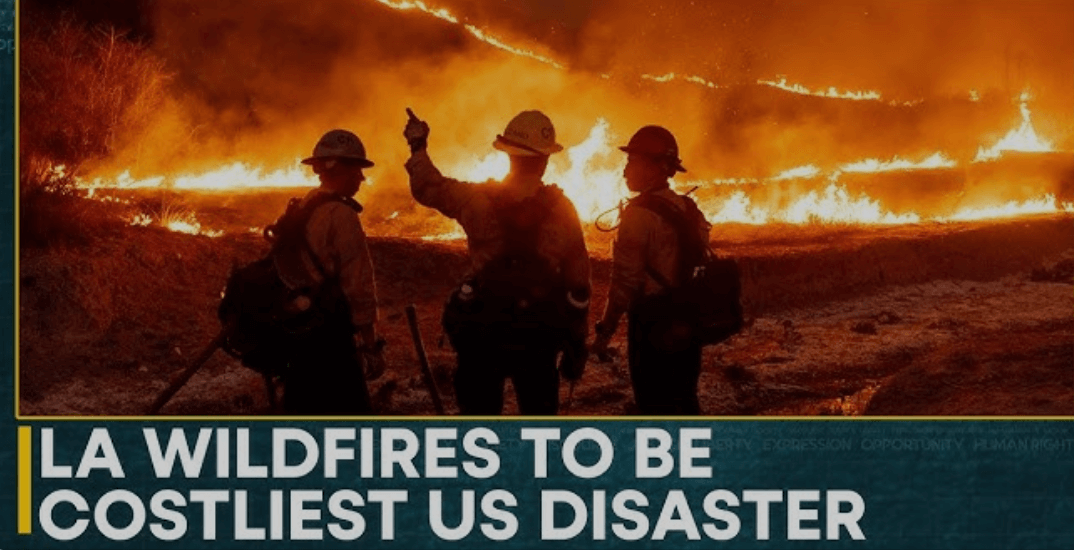

By Warren Beatty
With the California fires, consumer advocates have redoubled their atacks on the “greedy” insurance companies. California congressman John Garamende said from his eight-year experience as insurance commissioner that the insurance companies will “‘lowball’ and deny claims.” Carmen Balber, executive director of Consumer Watchdog, adds that home insurers in California are more profitable than the nationwide average (I guess Balber thinks insurance companies in California make too much money). Even Kamala Harris chimed in: “Many insurance companies have canceled insurance for a lot of the families… which is only going to delay or place an added burden on their ability to recover.”
When someone buys an insurance policy he/she is buying into a risk pool (an insurance policy is not a savings account) where everyone in the pool shares the risk assumed by that pool. It’s the shared risk concept that makes insurance work. The insurance companies are literally betting that a specific home won’t be destroyed. If the home is destroyed everyone in the risk pool pays a small (because of sharing) amount for its replacement.
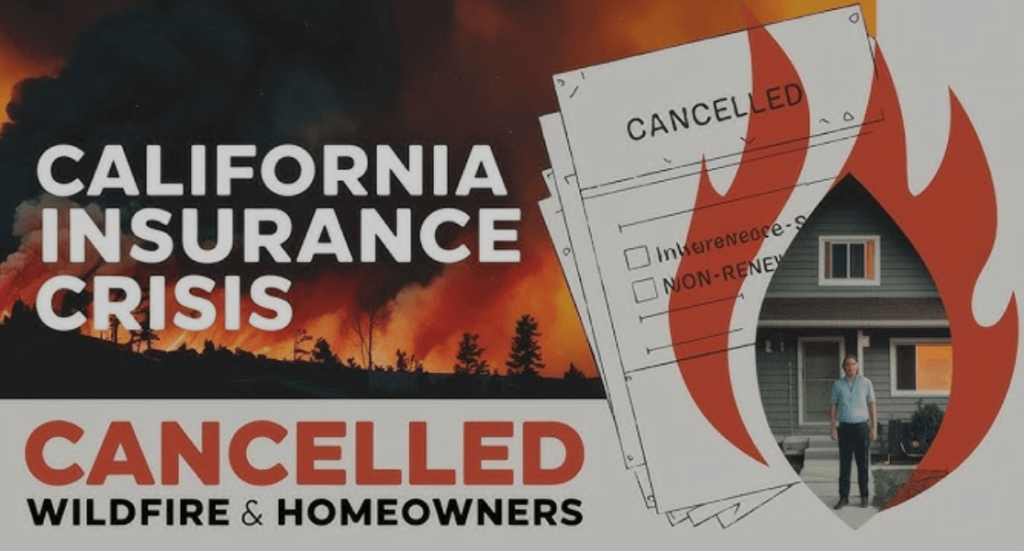
Insurance companies’ use actuarial tables to guide them when making decisions about risk pools. They are essential in the field of insurance, provide a statistical basis for assessing risks and making policy decisions. These tables provide data on critical factors (such as the probability of a home being destroyed by fire in a specific location (the 1% above) to predict future events with greater accuracy. Their importance cannot be overstated. They provide financial stability of insurance companies by enabling precise calculations of premiums and claim payout amounts.
However, California, between 2017 and 2022, had the largest gap in the country between actuarial table indicated rates and the rates approved by regulators. California’s laws limited insurers’ ability to reflect new risks of wildfires.
Insurance Commissioner Ricardo Lara’s office in the California Insurance Commission announced that California now requires insurance companies that ceased providing home coverage to hundreds of thousands of Californians in recent years as wildfires became more destructive (due to government neglect of forests and inaction due to conservation group threats) to provide policies in fire-prone areas if they want to keep doing business in California. The new requirement will force home insurers to offer coverage in high-risk areas, something the state has never done before. Lara’s office said in a statement that insurers will have to start increasing their coverage by 5 percent every two years until they hit the equivalent of 85 percent of their market share. Got that? Write more policies in fire-prone areas.
Further, under California regulations, once a fire emergency has been declared, insurance companies can’t cancel homeowner coverage in that fire area and surrounding zip codes for a full year. California is also forcing insurers to write more policies (that means assume more risk) in high-risk areas.
This remark by Lara expresses California’s attitude toward insurance companies: “Californians deserve a reliable insurance market that doesn’t retreat from communities most vulnerable to wildfires….” Got that? “Deserve.”
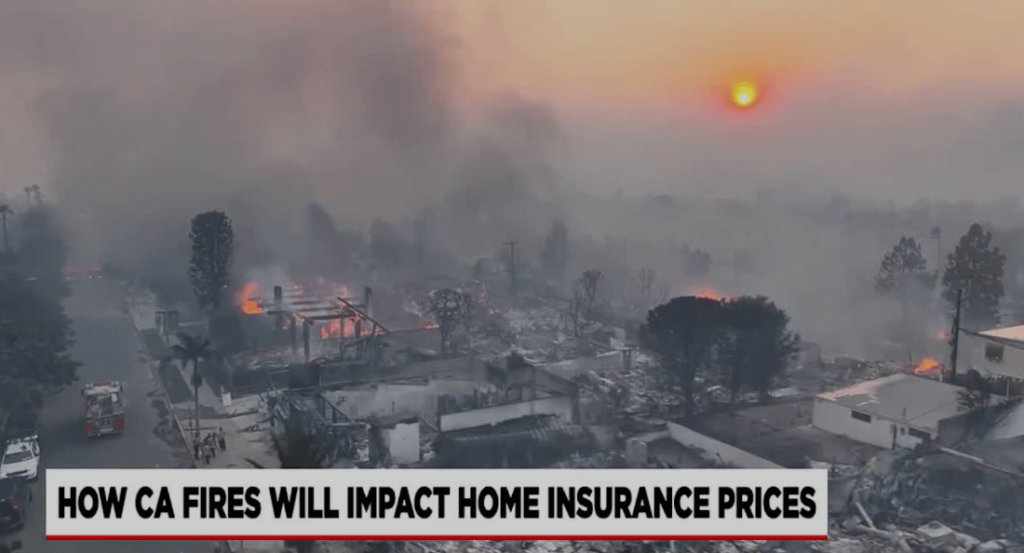
California itself is in the home insurance business via the California FAIR Plan Property Insurance. Its web home-page says it’s an association that was established to meet the needs of California homeowners unable to find insurance in the traditional marketplace. It’s a syndicated fire insurance risk pool comprised of all insurers licensed to conduct property/casualty business in California. FAIR says it’s a temporary safety net to support homeowners until coverage offered by a traditional carrier becomes available.
Three observations. First, it’s supposed to be a temporary safety net. But we all know that “temporary safety nets” have a habit of becoming permanent hammocks. FAIR has been around since 1968. Second, it offers “basic” fire insurance coverage. Nowhere can I find a definition of what “basic” fire insurance coverage is. Third, FAIR is available only through brokers (agents) so its premiums aren’t as low as they could be.
And here’s a statement Gavin Newsom and his minions ain’t gonna like: “It is your responsibility to purchase enough insurance, and the right kinds of insurance coverages to protect you in case of an insured loss.” Personal responsibility in California? What a concept.
This is a not untypical response to what is currently happening in L.A. Actor Rob Schneider tweeted, “F#@K You @statefarm. Screw You And All Your Phoney Commercials!! You Are A Pile Of Crap For Canceling Insurance Policies Of Californians! I Will Never Use @statefarm Insurance Ever Again!” Obviously, Schneider doesn’t know how insurance works. All insurance companies are in business to make money. It would be very difficult to keep stockholders happy if they didn’t make money. Plus, I missed Schneider stepping up to offer to take a risk as did State Farm.
Regarding ever-increasing policy prices, it’s replacement cost increases that drive premiums up. Insurance companies, just like you, are affected by inflation. Inflation puts insurance company executives between a rock and a hard spot. He/she wants to keep premiums down and, at the same time, make money to keep investors happy. Add the demands from agents for more money and the headaches never end.

applies here in NZ as well. We are fortunate that we have EQC coverage with earthquake insurance.
That was reviewed after Christchurch and the basic level was upgraded so that EQC carry the first 100k. Without that, we would have no or very expensive coverage.
Of course, we pay for that but better than nothing.
Key, deciding to pay for damage that wasn’t insured was bloody stupid. Now, people can’t be bothered because if it is bad, people reckon that we, the taxpayers, will front. Same for fire, etc.
Theoretically, you can do other things e.g. you could put the same money into a high-growth mutual fund or like the local gliding club own a block of shops so if they crash the glider then they have income and a property to borrow against.
Unfortunately the article gives no answers as to why many insurance companies cancelled numerous policies shortly before the fire season arrived.
What did they know to provoke such an action; ‘Conveniently’ in the areas worst affected by the fires?
Their ‘timing’ is interesting, and will no doubt keep the ‘conspiracy theorists’ entertained for many months….
It’s sort of mentioned in the article. The Californian government and local cities have been neglecting doing the required back burning or undergrowth clearance allowing the build up of debris. This behaviour hasn’t gone unnoticed and the insurance companies have been aware of it for some time. Donald Trump even raised it with Joe Rogan in his pre election interview, so that gives you some idea about how widely known the problem is. I listen to Joe Rogan’s podcast quite often and he left LA after Covid hit, and had mentioned several times how bad the fires can get there.
I don’t think it’s a conspiracy that the insurance companies were winding back coverage for fires last year. They just had enough of covering more risk than they wanted to be exposed to.